
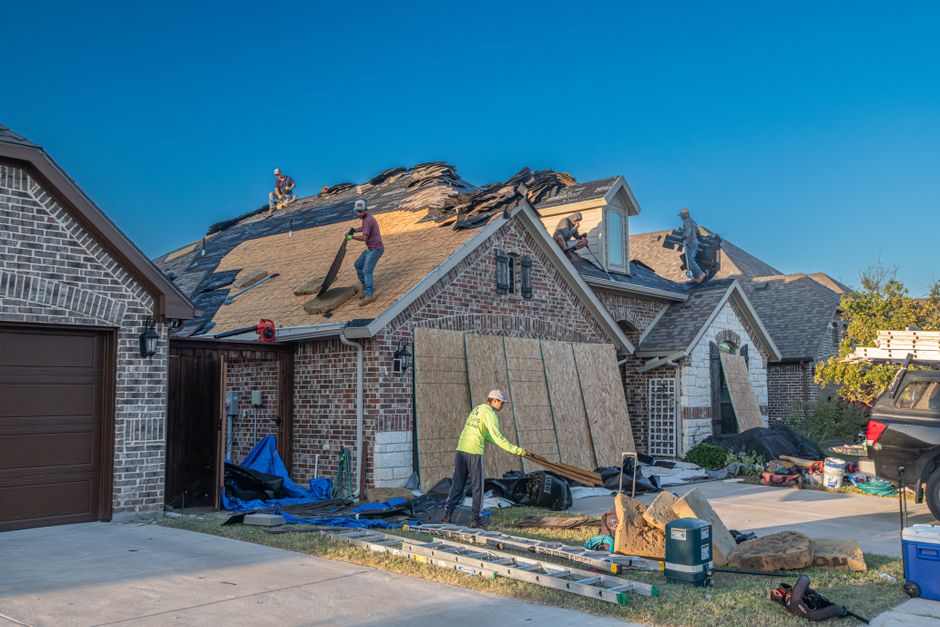
What does a roof tear-off involve?
A roof tear-off is the removal of existing roofing materials before a new roof system is installed. In most cases, the process includes taking off shingles, underlayment, flashing, and damaged roof decking so the roof structure can be inspected from the outside.
For homeowners in Williamson, NY, a tear-off is more than a noisy construction step. It is the point when hidden conditions—such as moisture damage, weak sheathing, or poorly installed flashing—can be identified and corrected.
A typical tear-off may include:
- Protecting siding, windows, landscaping, walkways, and outdoor equipment
- Removing shingles and other roof coverings
- Pulling out old nails and underlayment
- Inspecting the exposed roof deck
- Replacing damaged decking when necessary
- Installing new underlayment, flashing, and roof coverings
- Cleaning up loose nails and roofing debris
The exact sequence depends on the roof’s size, pitch, number of layers, condition, and accessibility.
Why is a complete tear-off sometimes necessary?
A complete tear-off allows the roof deck and underlying details to be examined directly. Installing new shingles over an existing layer may hide problems and can make it harder to correct ventilation, flashing, or moisture issues.
A tear-off is more likely to be needed when:
- Existing shingles are badly curled, brittle, or missing
- There are already multiple roofing layers
- The roof deck has water damage or soft areas
- Flashing around chimneys, walls, skylights, or roof edges needs replacement
- Previous repairs have created uneven surfaces
- Local code requirements or manufacturer instructions do not allow another overlay
Not every roof requires every material to be removed. A roof covering may sometimes be installed over an existing layer if the structure is sound and the work meets applicable requirements. That decision should be based on the roof’s condition rather than appearance alone.
What happens before the old roof is removed?
Preparation usually takes place before the first shingle is pulled. The work area may be marked off, and objects near the house may be moved or covered. Vehicles, patio furniture, grills, planters, and children’s outdoor equipment can be affected by falling debris or dust.
Inside the home, residents may notice vibration and impact noise, especially in upper-floor rooms. Fragile wall decorations, ceiling-mounted items, and objects stored in the attic may shift during removal. Securing loose items in advance can reduce the chance of damage.
It is also wise to plan for temporary changes around the house:
- Keep pets indoors or away from the work area.
- Close windows near active roofing work.
- Make arrangements for children to avoid the property during removal.
- Keep driveways and access paths clear.
- Protect vehicles from falling debris and construction dust.
Roofing work is weather-dependent. Rain, strong wind, ice, and wet roof surfaces can delay removal or require the exposed area to be covered temporarily. The region’s cold winters, frequent precipitation, freeze-thaw cycles, and lake-influenced snowfall make weather planning especially relevant for local households.
What will homeowners see during the tear-off?
Once removal begins, the roof may look unfinished for part of the day. Layers of shingles are stripped away, exposing plywood or other roof sheathing. Dark stains, nail holes, cracked boards, or areas that appear uneven may become visible.
Some roof deck damage is obvious, but not all of it can be confirmed before the old covering is removed. Water can enter around flashing, valleys, roof penetrations, and edges without creating a visible ceiling stain inside the house.
The exposed deck should be reasonably dry and structurally sound before new roofing materials are installed. Soft, deteriorated, or broken sections may need to be cut out and replaced. This is not automatically a sign that the entire roof structure has failed; localized repairs are common on older homes.
How long does a roof tear-off take?
Many straightforward residential tear-offs and replacements can be completed in one or two working days, but the schedule varies. A larger or more complicated roof may take longer, especially if it has steep slopes, several additions, dormers, multiple layers, or extensive decking damage.
Delays may result from:
- Rain, snow, frost, or high winds
- Unexpected damage beneath the shingles
- Limited access for material delivery or debris removal
- Difficult roof geometry
- Special flashing or ventilation work
- Required inspections or permit-related steps
The tear-off itself may be completed faster than the full project. Removal, deck repairs, underlayment, flashing, shingles, ventilation, and cleanup are separate parts of the overall process.
What hidden problems might be discovered?
The most common concealed issues involve moisture and ventilation. A roof may have damaged sheathing around a chimney, plumbing vent, valley, skylight, or wall intersection. Older flashing may be corroded, loose, incorrectly shaped, or sealed with materials that have deteriorated.
Other findings can include:
- Mold-like staining caused by long-term moisture
- Rusted or missing fasteners
- Inadequate roof-edge protection
- Blocked or poorly arranged attic ventilation
- Uneven decking from previous repairs
- Evidence of ice-dam-related water entry
- Rot near eaves where gutters or drainage have allowed repeated wetting
In a climate with snow, freezing temperatures, and winter thaws, roof edges and poorly ventilated attic areas deserve particular attention. Ice dams are not caused by shingles alone; heat loss, attic air leakage, insulation, ventilation, and weather conditions can all contribute.
What should be discussed if damaged decking is found?
Before additional decking is replaced, homeowners should understand where the damage is located, how extensive it appears, and whether it is related to an active leak or an older condition. Photographs can be useful for documenting areas that will be covered again.
Questions worth asking include:
- Which roof sections need replacement?
- Is the damage limited to the sheathing, or do rafters or trusses appear affected?
- What caused the moisture entry?
- Does flashing or ventilation need correction?
- Will the replacement material match the existing deck thickness?
- How will the exposed area be protected if weather interrupts the work?
Structural concerns, active water intrusion, electrical hazards, or unsafe access require qualified evaluation. Roof tear-offs involve heights, sharp materials, unstable surfaces, and falling debris, so they are not a suitable do-it-yourself task for many households.
How is the property protected and cleaned afterward?
A careful cleanup involves more than collecting large pieces of shingle. Small nails and sharp fragments can fall into grass, garden beds, driveways, window wells, and spaces beneath shrubs. Magnetic sweeping is commonly used on paved and lawn areas, although no cleanup method can guarantee that every small fastener will be found immediately.
Residents should inspect commonly overlooked areas after the work:
- Driveway edges and garage entrances
- Walkways and steps
- Areas beneath roof valleys and eaves
- Garden beds and play areas
- Window wells and basement stairwells
- Attic spaces for stray debris or daylight
Temporary coverings, protective boards, and tarps may be used during removal. These should be taken away when the roof system and surrounding property are secure.
What should a homeowner expect inside the house?
Most tear-off activity occurs outside, but vibration can be noticeable indoors. Light dust may enter through attic access points or small gaps. Ceiling movement, rattling fixtures, and brief bursts of noise are normal during removal.
Afterward, check attic areas for signs of water entry if the roof was exposed during changing weather. Also look at ceilings and upper walls for new staining, dampness, or bubbling paint. A small amount of pre-existing staining does not necessarily mean the tear-off caused a leak, but new moisture should be documented promptly.
A roof tear-off is disruptive, but it also provides the clearest opportunity to see what the roof is actually built on. For homes in Williamson, understanding the removal, inspection, weather, and cleanup stages helps residents recognize normal conditions, ask useful questions, and identify problems that should be addressed before the new roof is covered.
