
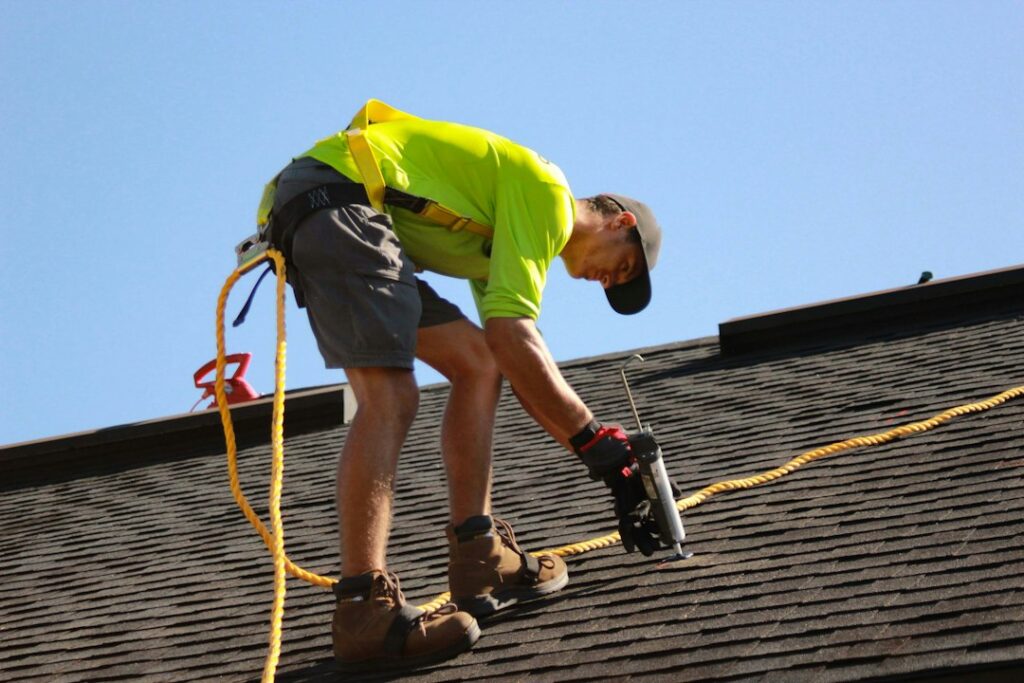
Walking on a roof can cause falls, damaged shingles, hidden structural problems, and injuries from skylights or overhead hazards. For most homeowners, the safest approach is to avoid climbing onto the roof unless the surface, weather, access equipment, and fall protection are all suitable.
A roof that looks dry and stable from the ground may be slippery, brittle, weak, or steeper than it appears. In Williamson, changing temperatures, wind, rain, snow, and ice can create especially unsafe conditions during seasonal inspections or minor maintenance.
Is it safe for a homeowner to walk on a roof?
It may be possible to walk safely on some roofs, but no roof should be treated as risk-free. Low-slope roofs with strong, continuous walking surfaces are generally easier to navigate than steep roofs, but even a small fall can cause serious injury.
Before deciding to climb, consider:
- Roof pitch and height
- Surface material and age
- Wetness, frost, snow, or algae
- Loose or damaged shingles
- Skylights, vents, and weak areas
- Nearby power lines or tree branches
- Whether a secure ladder and fall protection are available
A roof should not be walked on during rain, freezing temperatures, high winds, or after snow has accumulated. Morning condensation can make shingles slick even when the roof appears clear.
Which roof surfaces are safest to walk on?
Asphalt shingles should be walked on only when necessary and with care. Their surface contains granules that can loosen under foot traffic, especially when the shingles are hot, brittle, aged, or already damaged.
Standing-seam metal roofs are often difficult and hazardous to walk on because they can be extremely slippery. Metal expands and contracts, may have concealed weak areas, and can become dangerously hot or cold. Walking on a metal roof generally requires equipment and techniques appropriate to that specific roof system.
Wood shakes, slate, clay tiles, and concrete tiles are not suitable for casual walking. They can crack, split, or break under concentrated weight. A broken tile may also expose the roof to water intrusion.
Membrane roofs can appear flat and walkable but may have soft insulation, unprotected seams, rooftop equipment, or areas that are not designed for foot traffic. A flat roof is not automatically a safe roof.
How should someone prepare before climbing?
Preparation should happen from the ground first. Use binoculars or a camera with zoom to inspect the roof whenever possible. Many concerns, such as missing shingles, clogged gutters, damaged flashing, and fallen branches, can be identified without climbing.
If access is unavoidable:
- Check the forecast and wait for a dry, calm period.
- Wear footwear with clean, slip-resistant soles.
- Avoid loose clothing, slick gloves, and anything that can catch on equipment.
- Keep both hands available whenever climbing the ladder.
- Have another adult nearby who knows where you are and can call for help.
- Keep tools in a belt or hoist them after reaching the roof.
- Do not carry bulky items while climbing.
- Keep children, pets, and bystanders away from the ladder and the area below.
A ladder should extend above the roof edge enough to provide a stable handhold. It must rest on firm, level ground and be secured against movement. Gutters, decorative trim, and roof edges are not reliable places to brace a ladder.
What is the safest way to walk on asphalt shingles?
Walk slowly and deliberately. Place each foot where the shingle is supported by the roof deck or a roof framing member, rather than stepping on exposed edges, loose tabs, or visibly damaged areas.
On many asphalt-shingle roofs, the lower portion of each shingle is more vulnerable because the material is designed to overlap rather than support concentrated weight. Avoid stepping directly on raised tabs or attempting to move quickly across the surface.
Keep your body facing across the slope when possible. Move sideways in small steps instead of turning sharply or walking straight up and down a steep roof. Maintain three points of contact whenever practical: two feet and one hand, or two hands and one foot.
Never jump across ridges, valleys, skylights, or changes in roof level. These areas can contain flashing, gaps, brittle materials, or concealed water damage.
What roof conditions mean “do not climb”?
Some conditions make roof access unsafe regardless of experience. Stay off the roof if it is:
- Covered with snow, ice, frost, or freezing rain
- Wet from rain, dew, or condensation
- Blown with loose debris
- Coated with moss or heavy algae
- Damaged by a storm
- Sagging or visibly uneven
- Missing sections of decking or roofing
- Near overhead electrical lines
- Exposed to strong or gusty winds

Winter conditions deserve particular caution in Williamson. Snow can hide fragile shingles, roof edges, vents, and weak decking. Ice may form in shaded areas even after other sections appear clear. Snow and ice can also slide unexpectedly, endangering people below.
Do not climb onto a roof to remove heavy snow or ice. A roof rake used from the ground may be appropriate for limited conditions, but standing underneath falling snow or ice is also hazardous. Keep people and vehicles away from areas where roof loads may release.
Are roof harnesses and anchors safe for homeowners?
A harness is not a complete fall-protection system by itself. It must be correctly fitted, connected to a suitable anchor, and used with equipment designed to limit or stop a fall. An anchor attached to weak sheathing, a vent, a chimney, or an unverified structural point may pull out during a fall.
Fall-protection systems also require enough clearance below the worker. A short lanyard, improperly adjusted line, or nearby obstruction can lead to serious impact injuries even when the harness works as intended.
Workplace roofing rules require specific fall-protection measures for many elevated tasks. Homeowners should not assume that a borrowed harness, improvised rope, or a single roof anchor provides equivalent protection.
How can roof damage be inspected without walking on the roof?
Many inspections can be completed from the ground, attic, or upper windows. Look for:
- Missing, curled, cracked, or lifted shingles
- Dark stains or water marks on attic wood
- Damaged flashing around chimneys, vents, and roof intersections
- Sagging roof lines
- Granules collecting in gutters or downspouts
- Daylight visible through the roof deck
- Blocked or damaged drainage paths
A camera pole or binoculars can help with distant areas. Attic inspection is useful because leaks may appear away from the exact point where water entered. Water can travel along roof decking, rafters, insulation, or interior finishes before becoming visible.
When should a homeowner avoid roof access entirely?
Avoid climbing when the roof is steep, high, unfamiliar, visibly damaged, or difficult to reach safely. Professional fall protection is also warranted when inspection requires work near a roof edge, skylight, chimney, fragile material, or electrical hazard.
A roof inspection is not an emergency that justifies taking unnecessary risks. If a storm has caused visible damage, document the condition from the ground and keep people away from areas where shingles, branches, snow, or ice could fall.
The safest roof inspection is often the one completed without stepping onto the roof at all.
